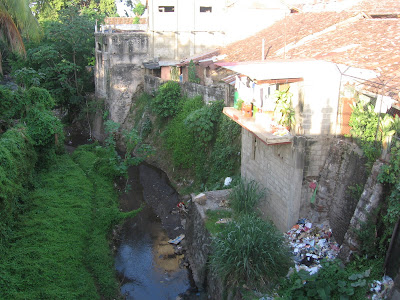
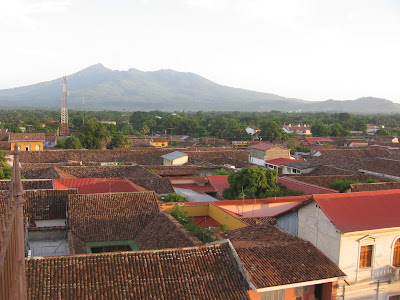
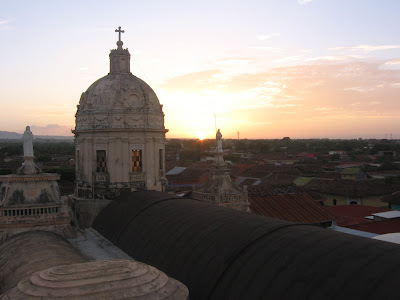
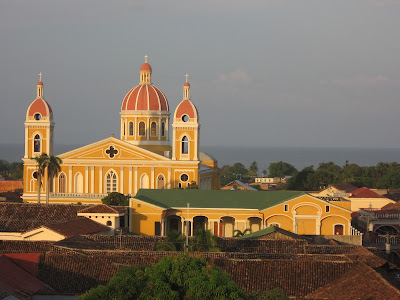
Final Post, Final Thoughts

Filed under: by: Vince Romanin

Well it's all over, and you are all probably wondering, as am I, was it worth it? Did I get what I expected? What did I learn? So let's start with the first week here, when we were supposed to write down our three goals for the trip, that should be a good first indication. I wrote:

  1. Learn Spanish: Check. That goes without saying. I learned mucho Spanish, more than I could have learned in the states. I also learned I have a long way to go.
  2. Learn Engineering and renewable appropriate energy applications in the developing world: Check. I know all about off grid photovoltaic systems, how people pay for them, how/why they help, and about solar ovens, solar dryers, small businesses in the developing world, etc.
  3. Something about culture: Yes. I ate gallo pinto every day and I know several swear words and obscene hand gestures in Spanish. While living with a host family I learned what life is like for the average Jose, and I also learned to like rum. Most significantly, I learned how people live without running water, trash disposal, electricity, supermarkets, etc. And how renewable and appropriate technology can create better lifestyles and jobs in that sector using solar autoclaves, solar ovens, solar food dryers, etc.
That's a start but that can't be it... What else? Well if this trip leaves one lasting impression on me, it's the idea of a socially, culturally, and environmentally responsible business. Grupo Fenix, Suni Solar, Salud del Sol are all great examples. I met two different people from California who moved down here for just that reason, one working with solar energy and the other with eco-friendly real estate.  It adds a sense of enjoyment and passion to one's work. And yes, sometimes you make more money if you ignore those things. Yes we capitalists are raised from day one thinking money, money, money; the bottom line is what matters. But I think UD taught us better than that.  I quote Einstein, "Any intelligent fool can make things bigger, more complex, and more violent. It takes a touch of genius — and a lot of courage — to move in the opposite direction."  Sometimes being socially and environmentally responsible means less profit, but not if you're good enough, not if you're bold enough. And I think we're good enough. So that's what I'll take from ETHOS, that's what I'll put in my pocket and save for later, that's what I think will stay with me when the memories fade.

I may decide to continue writing here, so feel free to check back, but I'm not sure how often and what I'll be writing about. I have lots more thoughts on ETHOS, but no time to write them now, maybe they will make it up here later.

Thanks for reading,
-Vince

"A mind that is stretched by a new experience can never go back to its old dimensions"
--  Oliver Wendell Holmes (and Brother Phil's email signature)

This (Last Short) Week in Nicaragua, July 21 - 25

Filed under: , by: Vince Romanin

Friday, July 25th I officially leave Nicaragua.  I land that evening.  Here's your last and most spectacular TWI

  • Cockroaches: don't like them.  Earlier this week, I saw a cockroach in my room, but this day was different than most days. Any other day that cockroach should be terrified that a giant leather and rubber fist of God labeled ADIDAS would squash his life from this earth, but not on this day.  I thought to myself, "he's done nothing wrong, and at the slightest provocation will scamper back into his little hole and out of my life." Maybe because I've grown accustomed to insects in my room? Maybe I was lazy? Maybe it was because I was out of toilet paper and didn't know how to remove his corpse from the premises, into the water-jug-cut-in-half cockroach graveyard that doubles as my trash bin? This day it seemed acceptable to cohabitate with a cockroach.*  It did not, however, yet seem acceptable to cohabitate with rats. (This last sentence we call 'foreshadowing') 
  • I was reading my book on my bed the other day, and I frequently hear squeaking in the gap between the top of the wall and the corrugated metal roof. I usually thought it was my fan. But after the squeaking came some noises that sounded like something moving, then... Then a rat fell from the ceiling and landed on the edge of my bed, about two feet from where my head was. It ran away and was never seen again.  I wasn't worried though, I was actually very happy that this happened when I was awake and lucid, because raining rats at night, in the dark, would have scared the HELL out of me. 
  • This week is Grupo Fenix's Solar Culture Course, which is an "introduction to the science and use of appropriate renewable energy technologies such as solar cookers, dryers and photovoltaic systems." (from the website).  It is 11 days long, takes place here in Nicaragua, and the course fee is $995, plus transportation.  The point of the story is I got to meet and talk to people who speak English in the 2 days they spent here in Managua, and I also went to visit Volcano Masya with them, with some good pictures if I can get them from somebody... The point of the story is also that if you are interested in renewable energy and want a vacation in the rolling hills of Nicaragua, check out the link above.

  • Always wanted to learn how to build a solar powered oven? Me too!  Salud del Sol has posted a manual on the construction of Solar Cookers, in both English and Spanish
  • Vince's 3 rules of traveling:
    • Never let fear motivate you. This isn't to say throw judgement out the window, but every time I hesitate to do something because I'm worried about language, strange places, new adventures... When I decide the affirmative I've never regretted it. This translates roughly to a favorite saying of mine: "Bad decisions make good stories" (to reiterate: 'bad' decisions referring to the feeling of fear or apprehension, NOT decisions which compromise safety or morals)
    • Never say later. As a rule, traveling is harder the older you get. Later is never better, and "next year" usually never comes. Do it now.
    • Never, ever ever ever say "Only one week left and I still haven't gotten sick!!" because karma goes double when you're on the road... 
  •  My last flight out got canceled and I didn't arrive home until Saturday (instead of Friday) which is why this post is one day late. I still have a final post coming, so check back tomorrow or Tuesday!
 It's good to be back,
Vince

*This might indicate I've been here too long

Almost Home!

Filed under: , by: Vince Romanin

My plane lands tomorrow, July 25th, around 5 pm.  For the second and not the last time this year, my world pulls a 180 and I say goodbye to everyone I've lived and worked with.  That's alot of goodbyes for one year.  I have one final TWI and a 'Final Thoughts' sort of post, but I'm going to wait until I arrive home to post them, so be sure to check back Saturday and Sunday to hear the dramatic conclusion.


This post has to be quick so I can finish up my work today, but to hold you over until Saturday, here is a preview.  Two years ago I studied abroad in London and Italy for the summer, and it was my first time living over seas for more than a week or two.  Between programs, I stopped in an internet cafe to write about the conclusion of our London program.  I recently found what I wrote, it was saved in my email 'drafts' section. I thought it would be a good prologue to my final thoughts on Nicaragua.

Jon and I are sitting in the internet cafe, our entire lives in suitcases next to us waiting to leave for Brussels and for the past hour I've been writing paragraph after paragraph on my afterthoughts, what I learned, and what I gained from the program, every time starting over because it doesn't really begin to cover what the program was about, so I give up.  Go live in another country for a month (I know some of you have) and you still won't have an idea of what this was like, but at least you will know why I can't describe it.  If you're in college, finish reading this article, find your study abroad office and your financial aid office, and tell them you want to go to another country.  It's easier to work out than you think, and there may not be another time you get an experience like this, ever.  Forget about summer jobs, you can work next summer.  Your friends will still be there when you get back, or bring them with you. In fact, bring me with you.

London down, Italy to go.
-Vince
There you have it, a preview of Vince after he studies abroad.


The last TWI will be up Saturday, and my final thoughts should be up Sunday.

Adios,
Chente

Thigs I Miss

Filed under: , by: Vince Romanin

As I wrap up my time in Nicaragua, and the fact that soon I won't be living here really sets in, I started thinking about here and there. To give you an idea of the difference, here are 5 Things I Miss From The States:


1. Constant Caffeine Access: This seems unintuitive since I'm living in a major coffee producing economy, but the coffee just isn't there. maybe it has to do with my inability to locate it, maybe it has to do with the fact that college towns cater to caffeine addicts like me with several coffee shops open to obscene hours. I want coffee on demand and I don't have it... yet

2. Food Variety: I eat the same thing ever day (Gallo Pinto, or fried beans and rice), because that's what they do here. Sometimes they ask me "what's a typical (breakfast, lunch or dinner) in the states?" and they look for me to say: I eat pancakes for breakfast. Every day. Because 'typical' meals exist here, as in they often eat the same thing.

3. Ease of Communication: It takes a strong constant mental effort to communicate. It's a consistent mental load that never goes away; I'm imagining a huge weight being lifted from my shoulders as I get back to the states, and my brain letting out a big sigh for one less thing to think about. I'll walk up to the cashier and open my mouth, and exactly what I want will quickly fly out without me even thinking about it, and into his or her ear and he or she will know exactly what it is. And I will smile.

4. Hot Water: I've found it pretty easy to accommodate myself to lack of modern conveniences (although I have it easy living in a big city, compared to the other students living in the countryside). After awhile we humans just come to accept what we're used to... except for cold showers. I'm not a morning person, and a sudden douse of cold water is a rude awakening.

5. Beer. We Americans know beer. There are two beers here, there is no choice between light, dark, ale, lager, draught, bottle, there's just beer #1 and beer #2. Both are mediocre-at-best lagers, both made by the same company. It's like having nothing but Bud heavy and MGD in the states, in every bar and restaurant ever. Think about it... it's a nightmare. Some places have imported beer, but the only ones I've seen are Heineken, Corona, and... only once... MGD. None of which I would call representative of the quality of beer elsewhere (read: I hate Corona).


And of course, this list wouldn't be complete without 5 Thins I Will Miss From Nicaagua:

1. Gallo pinto: Okay I said I don't like the variety, but Gallo Pinto is delicious and an icon of Nicaragua. It's also probably not great for you (if you eat it twice a day) so I won't miss it that much... however I look forward to the day, 5, maybe 6, maybe 20 months later when I finally cook it or eat it and a flood of Nicaraguan memories and images resurface.

2. Mexican Nuns: The two Mexican nuns living down the road are two of the nicest people I have ever met, and I'll miss them. See the hot sauce articles.

3. Speaking Spanish: I know, I know... this is a contradiction from #4 above, but in reality I want to speak two languages with the ease that I am able to speak one, and being here is the best way to do it. It will be infinitely harder and my progress infinitely slower learning Spanish in the states.

4. Sense of Reality.This is the big one. This is the moral of the ethos program; the reason we came; how we're supposed to feel after we return. After living here, the built environment in (parts of) the states seems surreal. In contrast, it is very apparent here how people interact with the world and its resources. In the US, water is hot, garbage disappears, lights turn on, food appears in the fridge, all by... magic; without thought, without consequence. Here, the flaws and kinks in the system remind you where and how all that stuff gets there. In Nicaragua power goes out, house wiring fails, garbage is very visible in the streets because of the lack of a well placed disposal system and in the campo garbage has to be burned. Electricity is expensive. At night, if you have no money, you have no way to see... your world is pitch black by 7. As a result of all this, it's easier to be mindful of one's own interaction with resources. In the US, it's so easy to forget because everything is so effortless; nobody considers where these things come from or go to. I'm not saying it's bad, although maybe it is. It's an inevitable byproduct of development. Its social implications and environmental effects and the corresponding solutions is a whole other discussion that I won't get into here, even though I have opinions :). The point is, when I get home, it'll all feel fake, like I'm being fooled, and like the world is bending over backwards for my convenience even though I don't need it or deserve it. Where does garbage go? Why can we afford to buy a $200 vacuum? Air conditioning on full blast, drive 3 hours in a car for the hell of it, leave the lights on at night... who cares? The plane ride back alone is more than most people we have worked with will ever afford, and why do we deserve it? I know because when I spent a weekend in Disney world, that's exactly how everything felt. I'm guessing after a month or two the poison will have set in and I'll throw away styrofoam lunch trays and take 20 minute hot showers without thinking about it. After that my ETHOS experience will turn into a line on my resume and a story to tell in bars, and the moral lessons will be slowly eroded by the American Dream--having more than everyone else. Time will change a sense of ugliness into complacency and there's nothing I can do... is there? I'd love for somebody to post a comment and tell me how wrong I am. But nobody will. Because all of us ethos students will in one months time drive cars, take hot showers, buy coffee and bananas imported from thousands of miles away because goddamnit we like bananas.

5. On a lighter note... Rum. These people know rum. The same company that makes the only two beers, also makes the only rum. What they lack in selection, they make up in quality. The rum is super cheap, and super good. I never liked rum in the states, but this stuff is wonderful. I'll bring some home for you.


That's all for today,
Chente


P.S. Sorry for the cynicism and sarcastic self-defamation and big words in #4, I've been reading alot of Dave Eggers lately. The good news is I'll fit in just fine at Berkeley.

This Week In Nicaragua, July 14 - 20

Filed under: , , by: Vince Romanin

Author's Note 7/21/08: When I wrote this post, I changed my blog colors to red and black. What I didn't think about is how awkward these jokes would be after I changed my colors back to normal. Please excuse the next few poorly planned jokes.

I know what you're thinking... Red and Black?? What happened to the hippie tree-hugger earth tones symbolizing the never ending crusade to save the environment using renewable energy? WHAT'S THE DEAL

Well, readers, this past Saturday was the 29th anniversary of the 19th of July 1979, when the Sandinistas took power ending the revolution. Think of it as 4th of July for the Sandinistas. Black and Red are the official colors of the FSLN (initials of the Sandinista party). Now that I have an excuse for my hideous clashing colors*, let's get on with the SECOND TO LAST(!) TWI...

The Second To Last(!!) TWI: 7/14 - 7/20

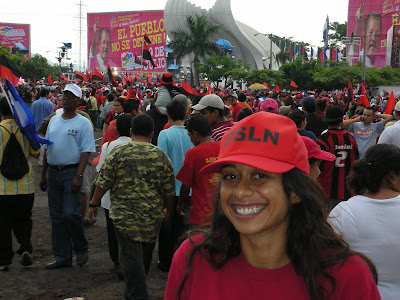
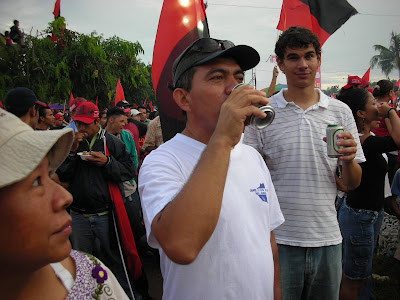
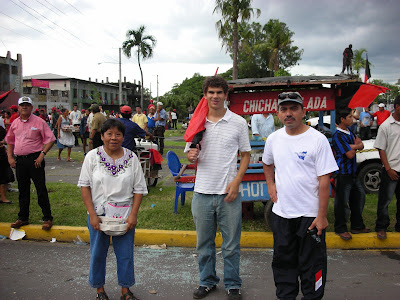
  • This Saturday, my host Dad, Jessica (another volunteer), one of the Mexican Nuns, and I went to the celebration of the anniversary of the evolution in the plaza in Managua. It was filled with hundreds of thousands of Nicaraguans with red and black scarves, flags, clothes, etc. Notable speakers included Daniel Ortega (the current president, a Sandinista [of course]), Hugo Chávez, Evo Morales, and the wife and daughter of Che Guevara.
  • Cute story: One of the revolution songs is sang to the tune of John Lennon's "Give Peace a Chance." Ready to learn a socialist revolutionary song? Here goes, with Lennon's lyrics on top and the Sandinista remix under (roughly translates to "what we want is work (as in jobs) and peace"):
    • All we are saaayy- iinnn, is give peace a chaannce
    • Lo que quereee-mmmos, es tra - bajo y paazz
  • While at this rally, a passing Nica (ok he could've been from another country, we'll call him a spanish-speaker) noticed that maybe I'm not from Nicaragua, and asked if I'm studying in the UCA (Universidad Centro America) and I said no, the UNI (Universidad Nacional de Ingeniería). All this, of course, in Spanish. Here's what happened next: He understood me, and FIST BUMPED ME! Let me say that again, I talked with a strange Spanish speaker and communicated well enough that I got fist bumped! I'm practically fluent.
  • And now, pictures! First of the celebration:

One of the Mexican Nuns, Me, and my Host Dad, ready to go with my FSLN Flag


Jessica in her FSLN hat, with the stage in the background


Cerveza para celebrar

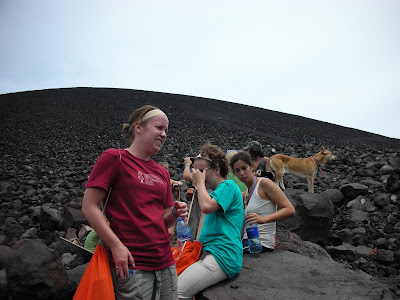
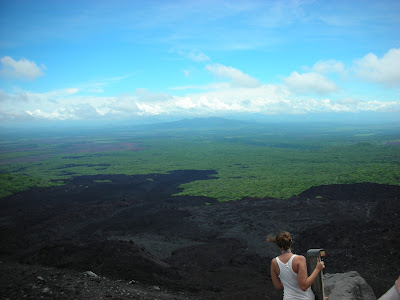
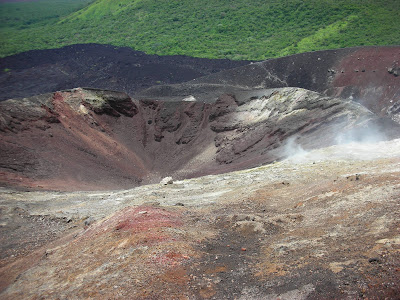
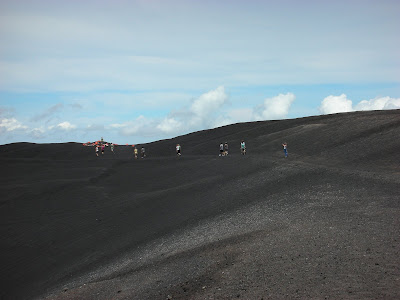
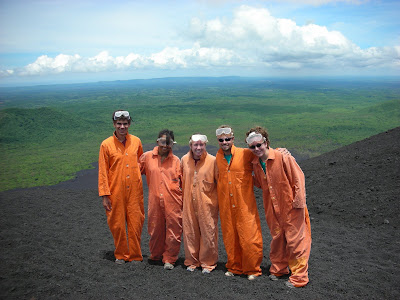
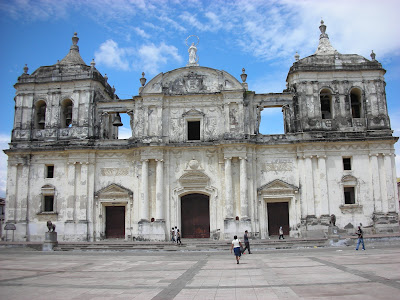
  • Now, a few pictures from my trip to León (not actually this week).

Climbing up the volcano, while the dog looks out for predators or lava


What a view! I don't know who that is.


The crater


Walking along the ridge


So maybe orange jumpsuits and goggles need an explanation... it's safety gear because we're about to SLED DOWN A VOLCANO


A Cathedral. The largest in Central America.


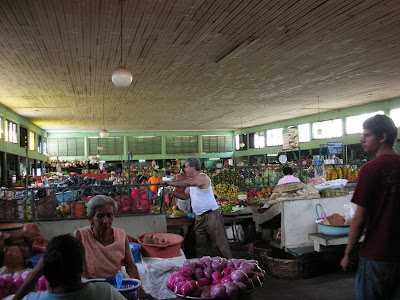
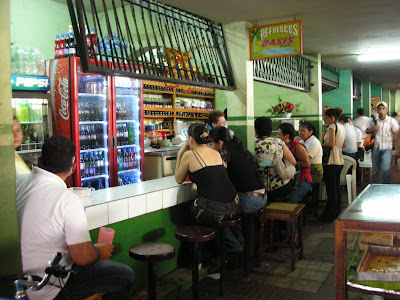
The indoor market


People eating in said market


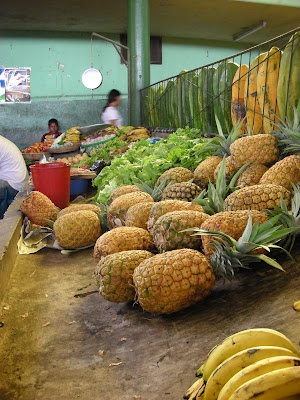
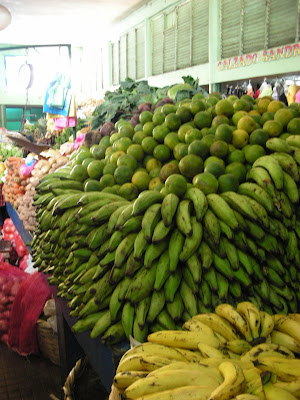
Fruit


More Fruit


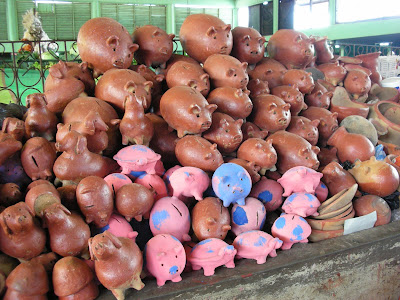
Pigs (not real)

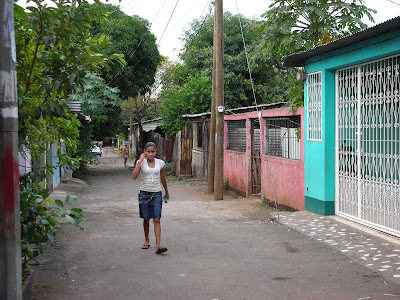
  • Okay now back to Managua, here are some pictures from my Barrio (Barrio = Neighborhood).

My Barrio (Not Pictured: My House)


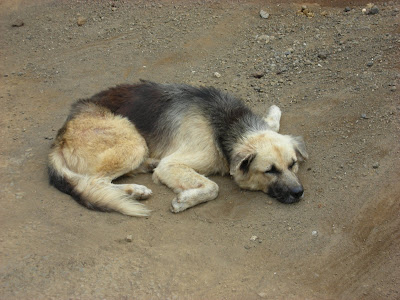
This dog tried to bite me. We're no longer friends. He didn't break skin. I call him Kujo.

I have lots more stuff to post, so I'll probably be posting several times this last week, so keep an eye out so you don't miss any!

Hasta Luego,
Chente

*The author in no way affiliates himself with FSLN or the Sandinistas, and the visit to the rally and blog colors are merely an attempt to immerse himself in the culture, and claims complete ignorance as to whether socialism or Sandinismo is what's best for Nicaragua.

Machismo & the Question of the Day

Filed under: , , by: Vince Romanin

It is very common here to hear cat calls at groups of women walking down the street, to see sexes fall into common stereotypes of domestic duties, and for people to scoff at a woman’s professional career. I’ve even seen a drive-by pinching from a guy on a motorcycle to an unsuspecting college age girl walking too close to the curb.

Here is another recent example:

I was riding in the back of a pickup truck with a Nicaraguan male acquaintance. It’s significant to note that he was happily married with a 2 year old daughter. We were driving through a reasonably touristed city on a Friday night, and as a result several groups of well dressed white women were walking down the streets, on their way out for the night.

Being in the open bed of a pickup and in plain view of the gaggles of tourists, my Nica companion decided to give a whistle. He then explained to me that girls like being called at; using the Spanish word that roughly translates to ‘cat-call’. He continued the whistles or shouts, as a demonstration for my benefit, asking me to follow along.

While I realized that this is something that often goes on here in Nicaragua, being directly confronted with it I couldn’t oblige. I told him frankly that I don’t believe that any girls ever liked or responded to being cat-called. He assured me that while some girls have ‘bad attitudes’, most ‘normal’ girls liked it.

We ended our conversation, me still in blatant disbelief and disapproval, and we moved on to other topics.

Ten minutes later we picked up two young female hitchhikers (hitchhiking in the back of pickups is very common here), aged 25-30, and my friend then asked them what they thought of cat-calls. Of course, they both responded that it is normal and they don’t mind. My friend then looked at me and smiled.

I guess it’s a cultural thing then, maybe being brought up around it makes it seem more ok, but it undoubtedly makes foreigners feel uncomfortable (okay so not me specifically) But is something like this okay to accept as a cultural difference?

I will say that I’ll be happy to return to the way we do it in the states, and while I’m reluctant to claim ‘our way is the right way’ when it comes to ‘cultural’ differences, on many issues there is definitely a right and wrong side of the line… even though the line itself is sometimes pretty blurry.

Question of the Day:

Machismo: cultural difference or disrespect for women? Post comments!


As the girls left and walked away, my friend yelled – in Spanish, of course – “Bye precious!”

Question of the Day, Bananas, and Charity

Filed under: , , by: Vince Romanin

I recently stumbled upon a couple articles that related to some of the things I've talked about before.

First, here is a very interesting article from the New York Times opinion section on bananas (discussed in an earlier post) that makes the surprising claim that they will soon jump to $1/pound. It also makes some interesting insights into the economies behind locally grown and imported fruits. The reason this is important enough to post on a blog that is supposed to be about Nicaragua is that food and where it comes from is more apparent here. You often buy beans, rice, and fruit on the street not far from people who grow them. Apples are rare, because they have to be imported. Why then, are we able to buy bananas cheaper than apples? It is sometimes because fruit companies (and coffee companies and textile companies) can get away with exploiting their workers in countries (like Nicaragua) where there are less rules and regulations in order to produce goods cheaply. This article paints a very informative picture of that situation with one popular fruit.

Yes, We Will Have No Bananas


Next, here are two articles from Brave New Traveler on the topic of the homeless, and whether or not to give them money. This past week, as I was walking home from the store two little boys* asked for the 2nd half of my juice. I refused. Afterwrad I read these two articles. Be sure to read the comments section at the end of the second article, there are some interesting first hand stories.

10 Ways You Can Help Street Children Without Giving Money

The Dilemma With Street Beggars

When it comes down to it though, the reason that I usually don't give simply because it is awkward. It is easier to ignore them and pretend they don't exist than to acknowledge them and pull out your wallet. I'm not saying it's right, I'm saying that I don't have time to evaluate the situation and determine if I believe them, or if it will benefit them more by me giving or refusing, so I panic, and walk away.

Question of the Day
After reading the two articles above, what do you do when confronted by a street beggar, a child with an obvious disability or health problem, or someone who just wants a dollar? Do you believe some and not others? Do you give out of pity? What are your excuses to give or not to give? What will benefit them more?

Vince

*After a long struggle with the first boy, me repeatedly saying no but laughing and talking to the kid the whole time, obviously too friendly to allow him to give up, he finally left. I just couldn't give a stern 'no' because he was kinda cute/funny. Not 20 seconds later a second boy approached, and 'here I go again I thought...' ready for another long battle. Not 10 seconds after the boy approached, looking straight up at me, he ran face first straight into a telephone poll and fell. His friends laughed and he got up and ran away embarrassed. I hated to laugh, but I did... alot.

A Recipe for Peanut Hot Sauce

Filed under: , by: Vince Romanin

Since my last cooking lesson with the Mexican Nuns, they told me that they would show me how to make salsa picante con maní*. After I ate the first batch of sauce in less than a week, I offered to buy the ingredients for the peanut variety (I also threw in chocolates as a regalo* for their kindness). This is also my new favorite hot sauce, and it goes wonderfully with gallo pinto*.

Here goes, hot sauce take two.

Ingredients:
Peanuts (about three handfuls, no shells. Can be roasted or raw, salted or unsalted.)
Dried chilies (Two or three handfuls, depending on how much heat you want)
Oil (we used soybean oil, you can use whatever)
3 Garlic Cloves
Salt
Water
Vinegar (optional)

Add a few tablespoons of oil to a frying pan and put on medium to high heat. Add the peanuts, stirring. You may want to heat them a little less if they are roasted, more if raw (but I’m just guessing. Mine were raw). After a few minutes, add the dried chilies, continuing to stir, and after a few more minutes add the three garlic cloves, whole. Keep the heat going until the garlic is pretty browned. If the oil bubbles or smokes, try turning down the heat.

Add the contents of the pan and some water to a blender. Blend thoroughly, adding more water as needed. Salt to taste.

If you plan to store the hot sauce, add a few tablespoons of vinegar to help preserve. If you are eating it right away this is not necessary.


*Spanish Vocabulary Lesson:

Salsa Picante – Hot Sauce
Con – With
Maní – Peanuts

Regalo – Gift

Gallo Pinto - Nicaraguan fried beans and rice, the most popular food here
Secado - Dried
Chilies - Chiles
Cocinar – To Cook
Aceite de Soya – Soybean Oil
Oja – Garlic

This Week In Nicaragua, July 7 - 13

Filed under: , by: Vince Romanin

Another week gone by, another post of Nicaraguan fun.

  • In spanish class, I translated 'ganar' (to win) in the conditional tense, and when I said it out loud, I immediately started laughing and awkwardly tried to explain why to my teacher. I'm not giving it away here, you'll have to conjugate it for yourself.
  • I woke up again to the squealing of a pig. Right across my bedroom wall, the neighbors slaughter a pig every Wednesday at 4:00 am. It is neither quiet nor quick. I finally learned how they do it; (PETA supports would be advised not to continue) when it is sleeping, they hit it in the head with the back of an axe, and repeat until it is dead. I'm not ordering pork from the neighbors, lest their business improves and they have to start slaughtering twice a week at 4:00 am.
  • The local kids that play outside my house learned a few english words (not from me...) So on occasion, when there is enough of them that their confidence is high, they yell out a "F*** you man!" They don't mean to be offensive, they just think it's funny. I asked where they learned it, and the name they gave me was surprising, I won't say which American it was.
  • A "Chicken Bus" is a yellow school bus used for transportation between cities, and is the cheapest and least comfortable mode of transportation through the country. Most of the buses are sold by school districts in the U.S. and make their way through Mexico to Nicaragua, and some of them still have identifiable english markings - either the name of a school, or english signs taped up on the inside of the bus. They are called chicken buses because people pack on like... chickens. About when you think the bus is full of people, they will let ten more on; and to your surprise they all fit. Once those ten are in you're ready to go, but five more jump on last minute, some still hanging out the back door trying to shove their way in while the bus is moving. But then the bus stops moving, because a old lady and her five year old want on. "No way in hell" you think, but they make it, along with their 3 foot basket full of mangoes.
  • We went on an installation trip to repair a solar/wind system by the pacific coast. The house was owned by a Californian who first came here to surf, but then decided to stay here and start an eco-friendly real estate business. It was pretty interesting, he had a solar hot water system, wind turbine, solar panels, and was completely cut off from the electricity grid cell phone network. He somehow still had internet though... We also killed a whole family of scorpions.
  • American shirts, or shirts with english writing, are common here. I've seen several of them with mistakes or typos; I believe lots of companies, when they make an oopsie, just dump the defective product down here. Here are some examples:
    • White letters on black: "I'm busy, your an idiot, come back later" watch those contractions... (also possible that this typo was intentional)
    • "Patriots 19-0" I didn't see this one personally, I was told about it. Apparently a presumptuous T-shirt company decided to jump the gun on the super bowl shirts, and after the Patriots' upset decided to dump them to Central America.
There's your Nicaragua for the week, buen provecho. Two weeks and two TWIs left!

Siempre Tranquilo,
Vicente

This Week in Nicaragua June 30 - July 6

Filed under: , by: Vince Romanin

Since I don't talk much about the day-to-day here, I've decided to start a TWI Nicaragua segment, with some brief headlines of each week's happenings (even though there are only 3 left).

This Week (June 30 - July 6)

-For Suni Solar, I'm working on designing a 20 meter lattice tower for a 1kw turbine. We went to visit the site, and it is a HUGE mansion being built by a doctor. I'm guessing a similar house in the states would cost between $500,000 and $1,000,000.

-For Grupo Fenix, I'm testing a solar food dryer, meant to dry Moringa leaves (dried moringa leaves are used as a vitamin supplement).

-I spent the weekend with other Grupo Fenix volunteers in León, Nicaragua. Activities included the largest cathedral in Nicaragua, Rubén Darío's Grave, the largest contemporary art museum in Central America (I was very impressed) and Volcano Boarding (youtube it). As usual, I'll let the pictures do the talking... as soon as I can get them from my friends.

-There is officially three weeks left, so all my projects are coming to a head, it should be a busy month.

-Us few Americans in León did our best to celebrate the 4th of July appropriately, which included toasting to America (but with Nicaraguan rum... ooops). We didn't forget you guys up there.

-Chicken foot soup is good. Chicken feet, however, are miserably disgusting.

-In our travels we met some very interesting people, including the graphic designer responsible for the glossy black and while/gray viney print of Ruckus.com. If you're in college you probably know what I'm talking about.

Nicaragua Facts:

-A Nicaraguan is a 'Nica'. White people are called 'chele' or 'gringo'; I think gringo is slightly more offensive (but not necessarily offensive)

-Everyone is late, all the time. They call it 'gringo time' and 'nica time'. Formula: gringo time + 0.5 hours = nica time. If I schedule a meeting at 9:00 (as in gringo time) people show up no earlier than 9:30 (because 9:00 gringo time = 9:30 nica time)

-The most famous and ubiquitous food is 'gallo pinto' which means 'painted rooster' (because it's almost the same color as a rooster?). There is no rooster in it. It is fried red beans and rice that serves as a side dish to stewed chicken or fried plantains, or stands alone (also served with cheese, sour cream, and/or corn tortillas). I eat it usually twice a day, and I'm still not sick of it.

-Rubén Darío, mentioned above, is a famous Nicaraguan poet and diplomat. Nicaraguans love their poetry, and Darío is by far the Shakespeare of poetry here.

There you go, your weekly dose of Nicaraguan lifestyle. Take once a week with a full glass of water and [I'll] come back in a month.

-Vince

On Awkwardness

Filed under: , by: Vince Romanin

This is an interesting post on the 'traveling awkwardness' I mentioned in my previous post. Here's a quote.

Try looking for a comfortable, merit-based explanation for why we are in a position to do what we’re doing and you’ll feel pretty stupid. It’s awkward.
If you like traveling, you should read it.

Why Travel? About Nuns and Hot Sauce

Filed under: , , by: Vince Romanin

Why do I travel? There's something about the complete lack of expectations and knowing you will be surprised at every turn. Not knowing what's in the food, how to call a taxi, what the hell people are saying, how the government works, what jobs are like, even everyday etiquette is sometimes 180.

The prospect of being completely out of one's element and the continuing realization that there is a whole new world that you know nothing about is, I think, the draw of travel for me.

And the food. I love to cook. While I never really learn any new recipes, I learn different ways to eat and cook food. Did you know you can boil a green banana and then eat it? or that you can fry beans and rice? or that corn tortillas are awesome? it opens up a whole new world of taste combinations, preparation methods, and things that fall into the category of 'edible'. While I would never learn to cook an authentically Nicaraguan dish, because I can't follow instructions in the first place, there will forever be a little bit of Nica influence in my recipe book.

There is one bad part... You can't help but feel out of place, nearly all the time. I always claim to be a student, for some reason I feel like that's the most legitimate excuse. It makes me feel better than if I were a tourist or anything else. This may be more of an internship than studying, but it is still, for me, education. I'm here to learn something. Oh, and for the food.

But you still can't help but think that you're annoying people or offsetting the balance with everything you do. If I get one thing out of this trip, I'm going to be nice to foreigners. It's not always easy. I won't complain when I get the guy at McDonald's who doesn't speak English or when I get stuck with the Indian guy at work who you can't understand. I'll probably do my best to make them feel a little more at home. After all, two generations ago I came from immigrants.

On that note, a recipe for hot sauce:
I live close to a pair of nuns, and while eating lunch there one day they had a Ball jar of tasty (and pretty spicy) hot sauce. Nicaraguan food is notoriously bland, and for those of you that don't know me I have an borderline unhealthy obsession with super spicy food. But because of the scarcity of hot sauce here, and the fact that I already sweat non-stop due to the heat, I hadn't eaten anything spicy in a long time. I was then very excited to find that the nuns were Mexican, not Nicaraguan, and had their very own recipe for delicious hot sauce that they were willing to share. One week later, I found myself in their kitchen on a Friday afternoon ready to learn. You wouldn't think making hot sauce would be hard, just liquefy hot peppers and season to taste, right? But... if you're going to have a recipe for hot sauce, why not get it from a pair of Mexican nuns in Nicaragua? Food always tastes better with a story.

First, take a couple handfuls (about 1/2 cup) of dried chili peppers. Put them in a pan on high heat, with nothing else, and cook until they've blackened a bit, constantly stirring so that you don't smoke up the house with pepper gas. Once they're nice and toasted, remove the peppers and put two small tomatoes in the pan (about a cup's worth) and just let them sit until they have a big black burnt spot. (This part looks really weird because you have a pan with nothing in it but two whole, unpeeled tomatoes...) Flip the tomatoes every few minutes until about half the skin is blackened and most of the rest is a weird, wrinkly burnt orange. Remove the tomatoes, peel them, and put in a blender 1/3 cup water, a few cloves of garlic, the peppers, and the tomatoes. Blend and salt to taste.

This one is pretty basic yet still very tasty, but I'm most excited to experiment. Imagine my excitement when the Nuns told me you can add Peanuts! (Or, more accurately, imagine my excitement the next day when I finally found out that maní means peanut) Not only that, but why add water? You could use red wine, vinegar and oil, tequila and lime juice, mango juice with habs... the possibilities are endless. I can't wait to find a grocery store, a kitchen, and a free Saturday afternoon...

Finally, if you were as enthralled by this recipe for hot sauce as I was, you should read Bill Buford's Heat. It's a book about Mario Batali, Italy, obsessive chefs, and quitting your job (and selling your soul) to be a cook. If you weren't, congratulations - you have a chance at a normal life.

6000 words on Granada

Filed under: , by: Vince Romanin


Sabana Grande and the Question of the Day

Filed under: , by: Vince Romanin

Not much to say about the Nica life, just letting everyone know I'm alive. I'm working on a different project now, a solar food dryer, and I could go into details but I won't.

Also, I'm visiting the community where the other UD students live, and one of the boys there calls me Chente (short for Vicente, and the Spanish equivalent of the Italian Chenzo). I think I like it :)

I also think I can see a marked improvement in my Spanish, it's definitely improved since I've arrived.

Finally, yesterday marks the halfway point, exactly five weeks left; which seems like barely enough time to finish what I need...

To leave all of you with something to do, since I don't have any good Nicaraguan stories, I think I'll open for discussion a small debate we had between us volunteers lately. Obviously we're all here working on renewable energy projects, and most of us plan to return to a career in a related field. At group lunches yesterday we got on the topic of environmentally and socially responsible businesses, and how and why they do (or do not) exist.

Weather or not you believe in global warming or you shop at wal-mart, when it comes down to it business make decisions every day that directly and severely affect the lives of workers, their families, and the environment (which lead eventually to the health of those same people). Sweatshops are on the rise in Nicaragua (and exist all over the world); pesticides, weather or not they hurt the earth (or you), in the long run, can have very negative affects on the farmers who use them; and food prices, trade regulations, and the economic situation of many farmers put people in a poverty cycle that they do not have the ability to get out of.

So, what's a human to do? On one side of the argument is that you should shop sweatshop free, buy organic, buy fair trade, buy locally produced foods, encourage companies to be socially responsible, and act accordingly and mindfully in your own business or career. If enough people do this, the market will demand more responsible business practices. I feel that's on the idealistic end of the spectrum.

On the other side is the practical side, that in the end people make decisions based on their bottom line. Even if one person does those things, in order to make a significant difference you have to make it economical to make good decisions - through laws, taxes, tax credits, and policies. This is more on the practical side of things. The problem with this is that government is slow, and this mindset gives people the excuse to get away with as much as they can as long as it's legal, and to let the government decide what is right or wrong.

So, what do you all think? The last time you bought a banana, it probably cost less than $0.50 because the farmers who picked it were paid next to nothing. Their kids can not get a student loan to go to school, and they have almost no chance at a better life. We have fair trade coffee, and England has fair trade bananas, but for the banana lover in the US, what are you going to do? Wait for policies to improve? Tell your friends not to eat bananas at the risk of sounding like a jerk (disclaimer: if anyone thinks your a jerk for that don't be their friend)? Eat the banana because you feel useless? Or is it too distant a problem to even worry or care, when you're worried about keeping your own family healthy?

In your job, if your company is morally or ethically unacceptable, some people feel they don't have the option to quit; they have to worry first how to provide for their own family, but the loss in your quality of life would still put you leagues above MOST of the world - in terms of living conditions, career opportunities, and health - so what do you do?

Acting as an example (as small as your impact may be) or blaming the system (but pushing for a better one): what do you think, readers? Leave comments!

-Vince

P.S. I like bananas too...

EDIT:
As for me, I'm going to (try to) do both.

cockroaches sleep on their backs?

Filed under: , by: Vince Romanin

This past weekend I spent at Disney World's Swan and Dolphin Hotel for an ASME conference... and the transition from the streets of Managua to downtown Disney was the most dramatic culture shock I've ever experienced in a 12 hour period. Many things cost literally 10x more in Disney than in Nicaragua (taxi, food, hotel...) The conference was good though, I got to use my cell phone to call friends & family, and we enojoyed our evening in Disney.

When I got home, there was a cockroach on its back in the shower. At first I was worried, I always hear that they survive everything, so why were they dropping dead on the middle of the floor in my room? I saw it as a sign, like when the parrot dies in a coal mine. I kicked it, and it definitely wasn't dead. It is now though.

the death count so far:
cockroaches - 3
scorpions - 1

Finally, I finished my third book since I've been down here, and all three have been amazing, and come highly recommended by yours truly.
The Road, by Cormack McCarthy: a story of a man and his son trying to survive in a barren, post-apocolyptic world, for which McCarthy won the Pulitzer Prize. Might make you cry. McCarthy also wrote ''No Country for Old Men.''
One Hundred Years of Solitude, Gabriel García Márquez: A story of a town, the family that founded it, its rise and fall. From a review by William Kennedy of the New York Times Book Review, as printed on the back cover of the book: ''One Hundred Years of Solitude is the first piece of literature since the Book of Genesis that should be required reading for the entire human race. ...Mr. García Márquez has done nothing less than to create in the reader a sense of all that is profound, meaningful, and meaningless in life'' I don't agree; I don't think everyone should read the book of Genesis. 100 Years of Solitude is now my all time favorite book.
Heat, Bill Buford: A writer for the New Yorker gives up his job to become a chef, with the guidence of Chef Mario Batali. Extremely entertaining, especially if you love cooking and feel like quitting your job to be a chef (I don't, but it's in my 20-year plan)

Pictures... to go with the last post

Filed under: , by: Vince Romanin

In no particular or chronological order:


I killed a scorpion! We named him Motzart... or maybe that was the Gekko? We didn't kill the Gekko though, don't worry.


A gorgeous hotel in Granada... it was two renovated spanish colonial homes, and super cheap (when compared to prices back home)


Isla de Ometepe: an island formed by two volcanes, not too developed and starting to attract more and more tourists. This is Volcán Concepción, the largest at 1600 m.


Who's that guy?


Adorable! at least until you notice the sripes on my shirt are sweat from where my backpack straps were.
Okay still kinda adorable.
(NOTE: For those who haven't read the last post yet, yes, that is Ashley.)


Another one of Volcán Concepción, taken from the island.


This one taken from Granada, a spanish colonial city on the lake, and a pretty happenin' place for tourists, especially backpackers.

Hurricane Alma, Ometepe, and Granada

Filed under: by: Vince Romanin

So this one might be short because I'm a little short on time...

Hurricane/tropical storm Alma hit Nicaragua this past... thursday? Anyway, some parts of the country had flooding problems, but luckily I didn't get it too bad here in Managua, it just rained for a solid 24 hours and turned the streets into rivers...

Ashely visited this past weekend! I took a day or three off and we spent a couple days in Granada, a colonial city full of Spanish architechture, and another two days on isla de Ometepe, an island made of two volcanes in Lago de Nicaragua. Hopefully I'll be able to get pictures up soon.

Finally, this weekend I'll be in Orlando, Fl for an ASME conference, with my good old USA cell phone, so feel free to try to call me! Although I probably will be in meetings all day so don't expect an immediate answer...

That's all for now,
Vince

Livin' the dream

Filed under: by: Vince Romanin

Hello readers,
I'm working on my second week here, and I think the spanish is getting a little easier... I've had to talk to people about the project I'm working on, and that required a long engineering vocabulary... but a couple days with my dictionary and I'm getting better. I also found someone who will come to my house to give me lessons, so that will help too.

The project I'm working on is the hybrid photovoltaic/water still. It uses a solar panel with parabolic concentrators to increase the energy output, and the cells are cooled with water which is then evaporated and condensed, removing any salt. Like I mentioned earlier, solar powered water stills exist, but they are often not cost competitive with other methods of desalination. Rural areas often have problems with both access to electricity and clean water. Solar cells can recieve concentrated light and thus have a higher output, but once they get too hot their efficiency drops. In cooling them with water, the system can produce more energy with less solar cells (the most expensive part of the system) and also produce clean water. This has the potential of lowering costs and making the combined system more economical.

In other news, I tried to make it a point to stay in the Clean Plate Club (CPC) for the whole summer, but unfortunately not even two weeks in and I'm out. My host mom served eggs with hot dogs in them (more hot dogs than eggs...) and for those that know me, you know that hot dogs take the #2 spot of worst things to put in my mouth, next to tequila. I tried, but only made it through half of them... I was hoping that the american bastardization of tubed meat that is the hot dog wouldn't have made it to Nicaragua, but I was wrong.

This weekend Ashley is here!! I'm very excited, and this weekend we're planning a trip to somewhere in Nicaragua, but unfortunately the entire country was swallowed this morning by a monster of a tropical storm and it has been raining nonstop since late last night. It's supposed to keep goign through the whole weekend...

Also, I lost the memory card for my camera... I left it in an internet cafe and by the time I came back it was gone. I have a second one, but the one I lost was also a USB drive, and the other one is not, so I have no way of posting pictures for the rest of the summer. You'll all have to wait until I get home I guess.

And finally, the bus I took home from my last installation trip had a big TV up front hooked up to a DVD player, and the driver played old American music videos the whole way home. On that trip, all of the 60-70 people on the bus got Rick Rolled, video and all (complete with Jared jumping off a chain link fence), and I'm probably the only one that knew it. For those of you who aren't familliar with rick roll, feel free to wikipedia it.

That's all folks, until next time,
Vince

P.S. Dear Michael Scott fans (you know who you are): that slip was on purpose... I'm always trying to please my visitors, and you're welcome.

One picture...

Filed under: , by: Vince Romanin

The past two days I spent on another installation on a farm on top of a mountain with a BEAUTIFUL view. Also parrots flying around added to the atmosphere.

Also, either I´m getting a little better at communicating, or people are getting better learning how to talk to me (probably a little of both).

Why I´m Here

Filed under: by: Vince Romanin

I realized today that I haven´t talked much about why I´m in Nicaragua in the first place, so here goes-

I just graduated from the University of Dayton with my mechanical engineering undergraduate degree, and I have a summer off until I start graduate school at the University of California, Berkely for my PhD in mechanical engineering. I (obviously) couldn´t spend such a pivotal summer in Ohio with all the interesting engineering opportunities that I had available to me that would prepare myself for graduate school. Another co-op with GE was possible, so was an opportunity to do research for an engineering school in Germany (although a hard program to get in to). I had been considering the ETHOS program for awhile, and I only didn´t do it last summer because I had a co-op lined up with GE. My roomate Jon did, and it was highly recommended by several engineering faculty at UD and several engineers in the field (some in hiring positions).

Taken from the ETHOS website-
"ETHOS is founded on the belief that engineers are more apt and capable to serve our world appropriately when they have experienced opportunities that increase their understanding of technology's global linkage with values, culture, society, politics, and economic development. ETHOS seeks to provide these opportunities through international service internships as well as through collaborative research and hands-on classroom projects that support the development of appropriate technologies for the developing world. The internships allow students to utilize their skills and education to help solve real issues facing people in less-developed communities; collaborating with them as a positive force for improving their quality of life. "

So, I decided to spend my summer on a tripple-threat cultural imersion, spanish language lesson, and engineering internship (of course focusing on the social and economic impacts of renewable energy projects in developing nations). The cultural imersion part is sort of a vacation from the world I know to take my mind of the fact that I just moved out of the UD Ghetto, my favorite place in the entire world, and make myself forget that I just graduated. The spanish language lesson is because I always wanted to be bilingual, and finally the engineering part will of course help me professionally.

It turns out it was a better choice than I knew, becuase the individual I want to work for at Berkeley, Dr. Dan Kammen, has several students in his lab visiting Nicaragua for the summer to work on a company that uses wind turbines in rural electrification projects (Suni Solar is very similar, using photovoltaics for rural electrification). Dr. Kammen is actually not in the department of mechanical engineering, but in the Energy and Resources group. He also heads up RAEL - the Renewable and Appropriate Energy Laboratory. Simply put, he deals with renewable energy systems. So, I´ll get to meet some of his students, and maybe even Dr. Kammen himself (he mentioned he may visit).

That´s all folks, it´s dinner time.

Vince